Kilimanjaro 5 Days Marangu Route: The Shortest Path to Africa’s Summit
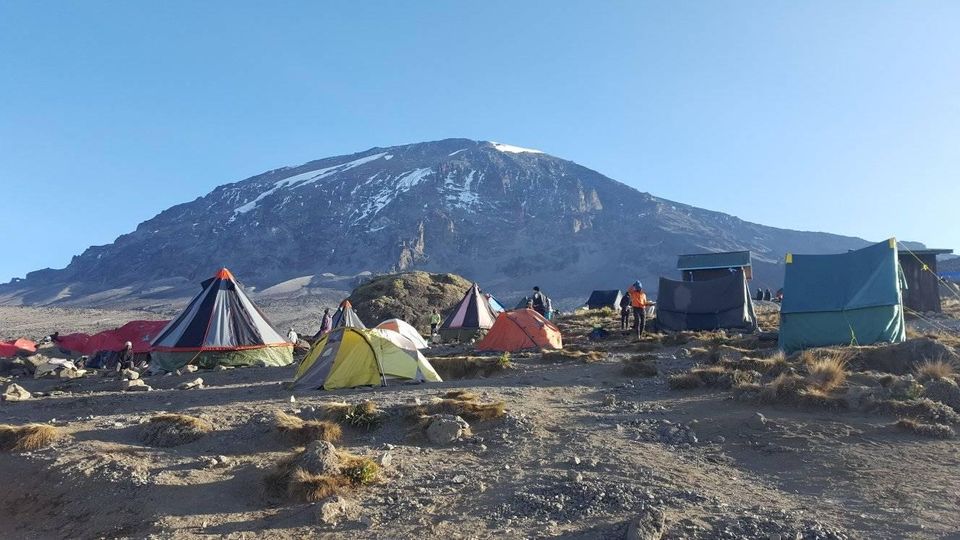
The Kilimanjaro 5 Days Marangu Route is the most direct route to the summit of Mount Kilimanjaro, offering trekkers a fast-paced but rewarding journey to the Roof of Africa. Known for its comfortable hut accommodations and well-trodden paths, this route is ideal for adventurers looking to summit Kilimanjaro in a shorter time frame. Over five days, you’ll experience Kilimanjaro’s diverse climate zones, from lush rainforests at the base to the snowy alpine desert at the summit. Although shorter, this route requires strong stamina and proper acclimatization to ensure a successful summit attempt. The Marangu Route is often chosen for its straightforward approach and easier logistics, making it a popular option for trekkers worldwide.
Call to Action:
Ready to experience the thrill of Kilimanjaro in just 5 days? Contact Safari Experience Africa today to book your Kilimanjaro adventure via the Marangu Route and enjoy the best service as you conquer the highest peak in Africa! Your adventure awaits—start your journey now!
Kilimanjaro 5 Days Marangu Route Itinerary:
Day 1: Moshi to Marangu Gate to Mandara Hut
Your trek begins at the Marangu Gate after a short drive from Moshi. Once registration is complete, you’ll begin your hike through the lush rainforest, where you might spot various wildlife, including blue monkeys and exotic birds. The trail winds through the forest and after 4-6 hours of hiking, you’ll reach Mandara Hut at 2,720 meters. The first night is spent in huts, allowing you to recharge for the following day.
Day 2: Mandara Hut to Horombo Hut
On Day 2, the trail ascends out of the rainforest and into the heath and moorland zone. The scenery opens up, offering panoramic views of the peaks ahead. You’ll pass by fascinating geological features such as Maundi Crater before reaching Horombo Hut (3,720 meters) after 6-8 hours of trekking. The vegetation here is more sparse, and the air feels cooler as you gain elevation.
Day 3: Horombo Hut to Kibo Hut
Leaving Horombo Hut behind, the trail continues through alpine desert toward Kibo Hut, located at 4,700 meters. The landscape becomes more barren, with rocky terrain and fewer plants. The trek covers a distance of about 9km and takes around 6-8 hours. Upon arrival at Kibo Hut, you’ll prepare for the early morning summit attempt, resting early to conserve energy for the challenging climb ahead.
Day 4: Kibo Hut to Uhuru Peak to Horombo Hut
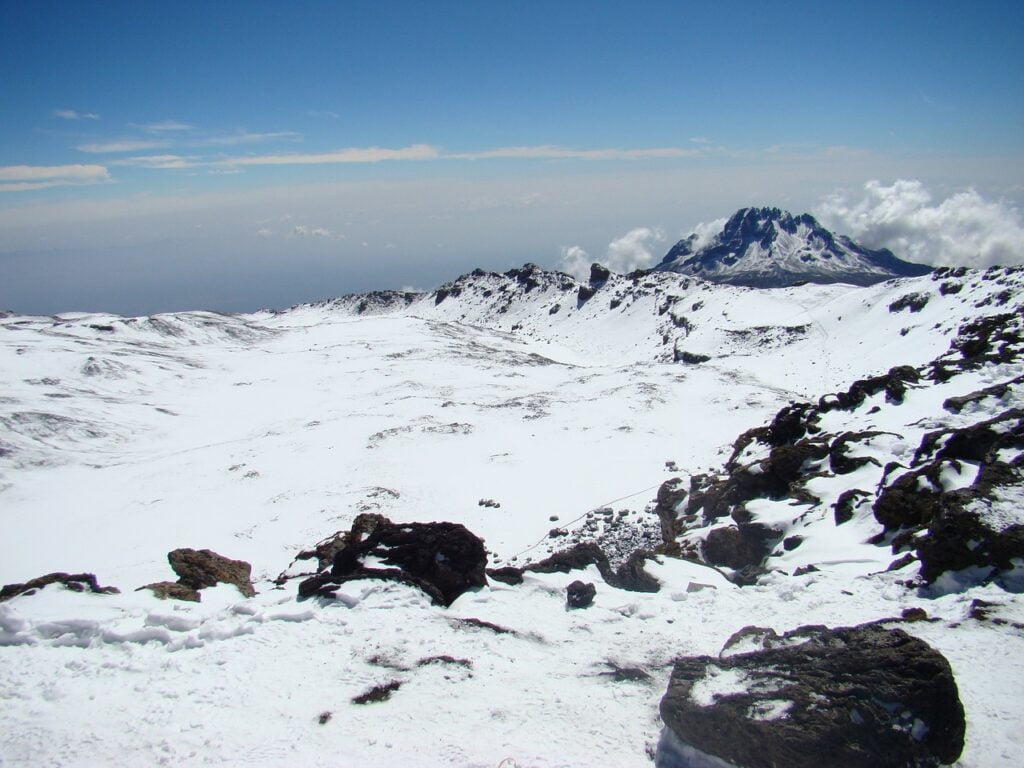
Summit day begins in the early hours, around midnight. You’ll make a slow and steady ascent to Gilman’s Point (5,685 meters), which sits on the crater rim of Kilimanjaro. From here, it’s a final push to Uhuru Peak, the highest point in Africa at 5,895 meters. The climb is steep, but reaching the summit at sunrise is a once-in-a-lifetime experience. After enjoying the views from the top, you’ll descend back to Kibo Hut for a brief rest, before continuing down to Horombo Hut for the night. This is the longest and most demanding day, often lasting 10-14 hours.
Day 5: Horombo Hut to Marangu Gate to Moshi
On the final day, you’ll descend back through the moorland and rainforest to Marangu Gate, where you’ll collect your summit certificates and reflect on your amazing journey. A vehicle will then transfer you back to Moshi. The descent usually takes around 6 hours.
Kilimanjaro Tour Inclusions & Exclusions
Tour Inclusions:
- All park fees and permits
- Professional mountain guides and support staff
- Quality tents and camping equipment
- Meals during the trek (breakfast, lunch, dinner)
- Accommodation before and after the trek
- Transfer to and from Kilimanjaro International Airport
- First aid kit and emergency oxygen
Tour Exclusions:
- International flights and visas
- Personal gear and equipment (e.g., sleeping bags, trekking poles)
- Tips for guides and porters
- Travel insurance
- Optional excursions or additional activities
FAQs for Kilimanjaro 5 Days Marangu Route:
1. Is the Marangu Route suitable for beginners?
Yes, the Marangu Route is considered one of the easier routes due to its gradual ascent and hut accommodations. However, it’s still a demanding climb that requires physical fitness and mental preparation. It’s important to acclimatize properly and follow your guide’s pace.
2. What type of accommodation is provided on the Marangu Route?
Unlike other routes that involve camping, the Marangu Route offers accommodation in huts, which is a unique feature. These huts have shared rooms, communal dining areas, and basic facilities, providing trekkers with more comfort compared to camping.
3. How difficult is the Kilimanjaro 5 Days Marangu Route?
Though shorter and considered one of the more accessible routes, the Marangu Route is still physically demanding, especially on summit night. The rapid ascent can make it harder for some trekkers to acclimatize, so being in good shape and allowing time for acclimatization is important.
4. What’s the best time to climb Kilimanjaro via the Marangu Route?
The best time to climb Kilimanjaro is during the dry seasons, which are from June to October and December to March. These months provide clearer skies and more stable weather, making the trek safer and more enjoyable.
5. How many hours of trekking can I expect each day?
Each day varies in terms of distance and hours trekked. On average, you can expect to trek between 4-8 hours daily, with summit day being the longest, taking 10-14 hours to complete both the ascent and descent.
6. What is summit night like on the Marangu Route?
Summit night is the most challenging part of the trek. Starting at midnight, you’ll trek through the cold and darkness to reach Gilman’s Point before continuing to Uhuru Peak. The ascent is steep and tiring, but the view from the top and the sense of achievement are well worth the effort.
7. How should I prepare physically for the 5 Days Marangu Route?
We recommend a few months of regular aerobic training, such as hiking, running, or cycling, to build stamina. If possible, practice hiking at higher altitudes to help your body adjust to lower oxygen levels.
8. What kind of food is provided on the trek?
You will be served three meals a day—breakfast, lunch, and dinner—prepared by experienced cooks. The meals are nutritious and designed to keep your energy levels up throughout the trek. Special dietary requirements can be accommodated with prior notice.
9. Can I rent gear for the Kilimanjaro trek?
Yes, if you don’t have all the necessary equipment, items such as hiking boots, jackets, sleeping bags, and trekking poles can be rented in Moshi. Your tour operator can help arrange this before the trek begins.
10. Do I need to take altitude sickness medication?
While it’s not mandatory, many climbers choose to take medications like Diamox to help prevent altitude sickness. Consult with your doctor before the trip to discuss whether altitude medication is right for you. Drinking plenty of water and following a slow ascent pace also help mitigate the risk.
Build Your Trip
Tour Expert
Contact Our Expert To Plan Your Trip Today
Top Destinations in Africa